The Future of Food Safety in Europe: Update of regulatory framework and research needs about novel foods
The PROTWIN and Excel4Pro EU projects are hosting a free webinar on 31 March 2026 (09:00–10:00 CET) exploring updates to the European food safety regulatory framework, with a focus on novel foods and future research needs. Speakers include Dr. Veronica Lattanzio discussing regulatory updates and research gaps, and Dr. Betul Vazgeceron Codex’s role in novel food safety and trust-building.
The online Zoom event is open to all stakeholders interested in advancing safe, innovative plant-based proteins and sustainable food systems.
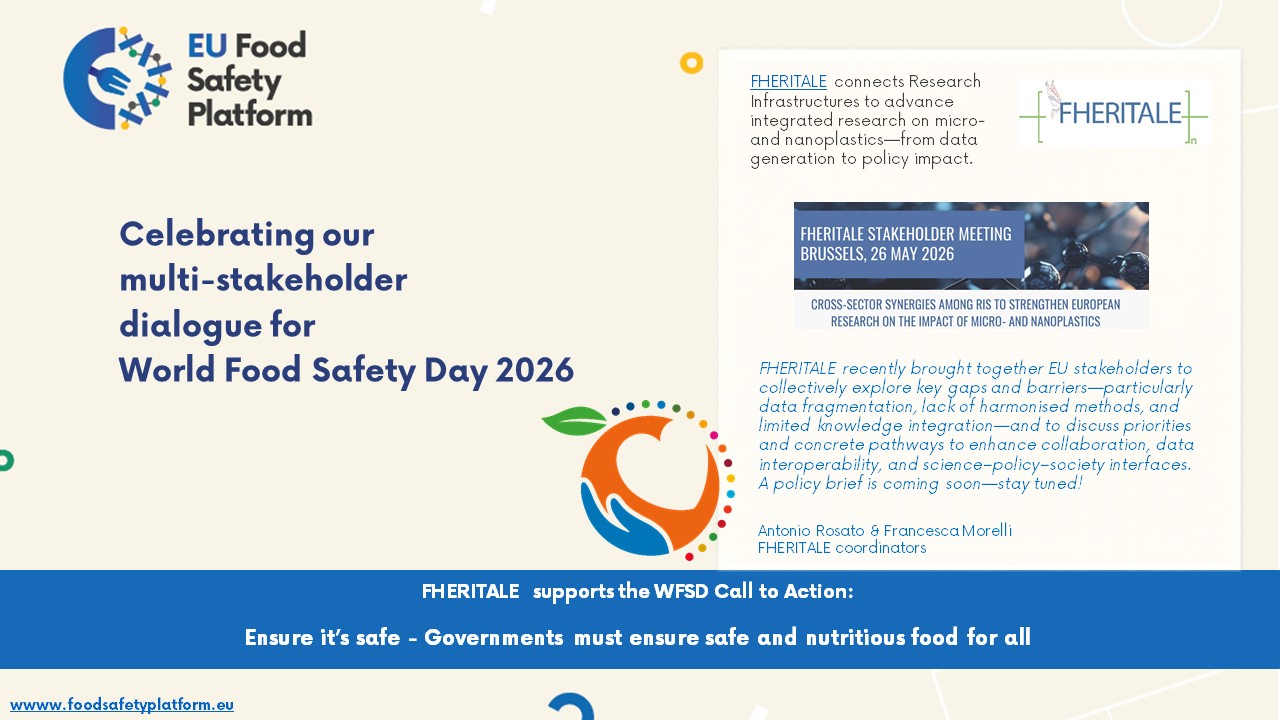
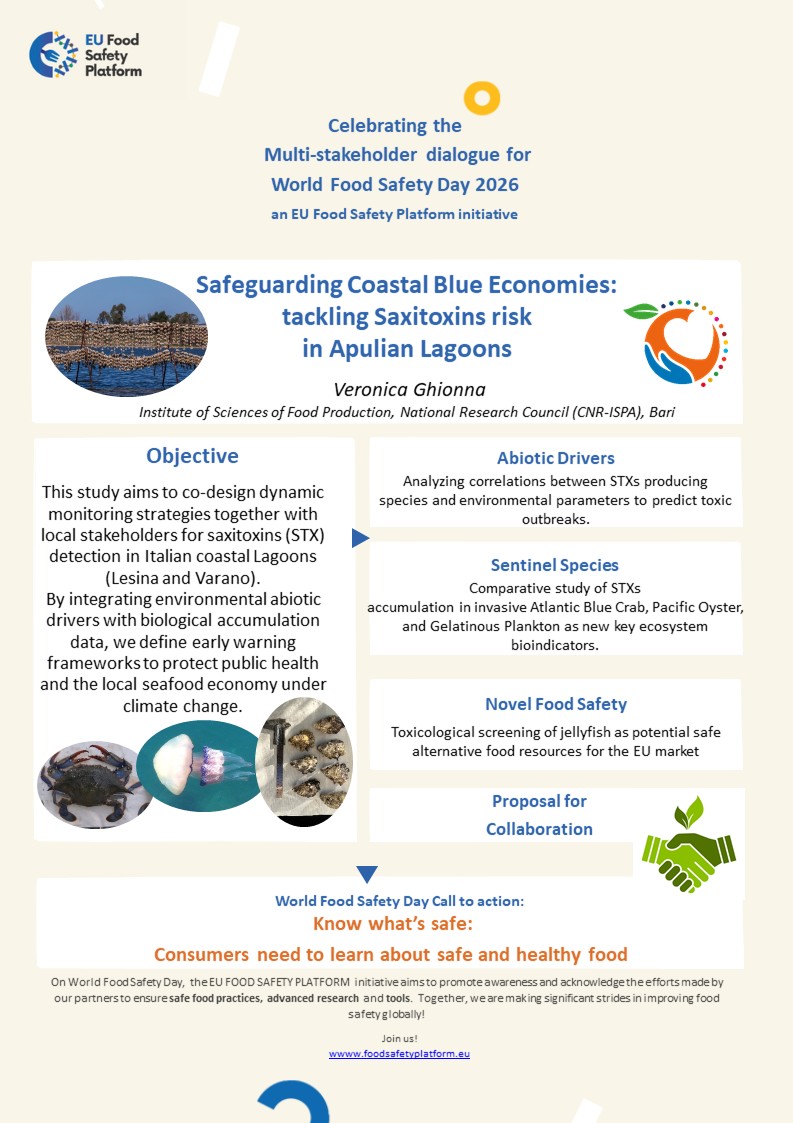
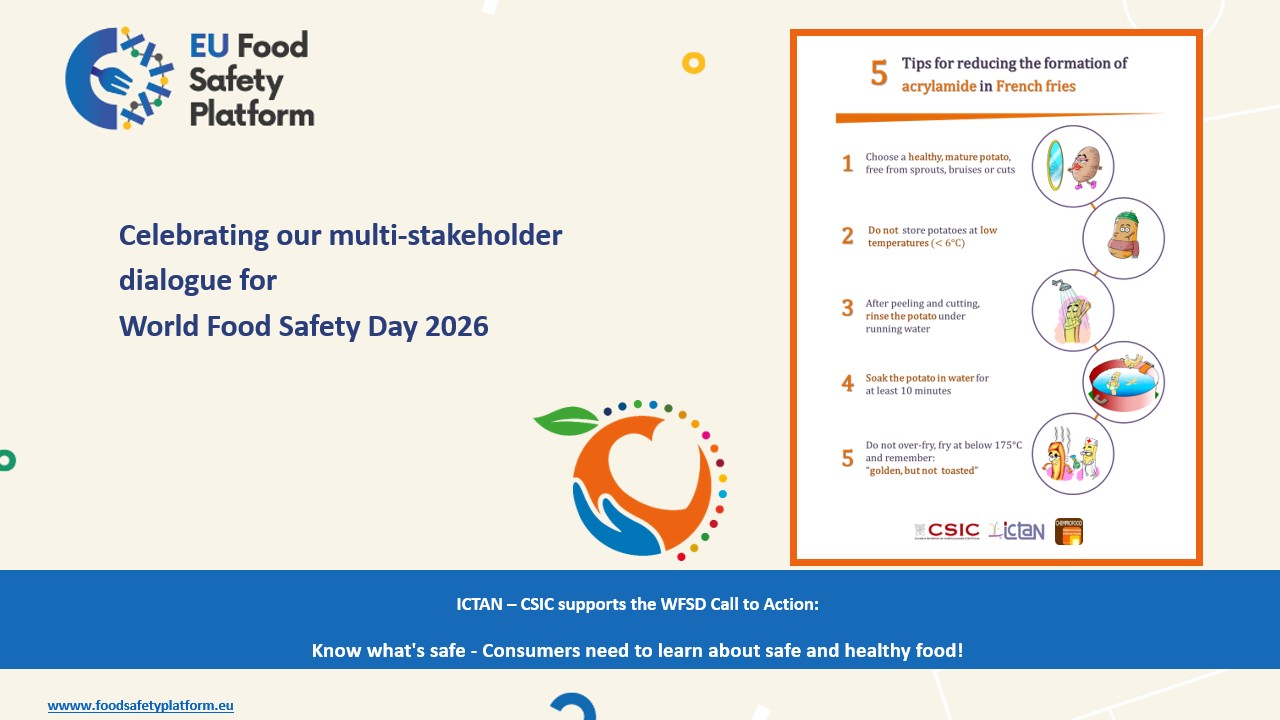
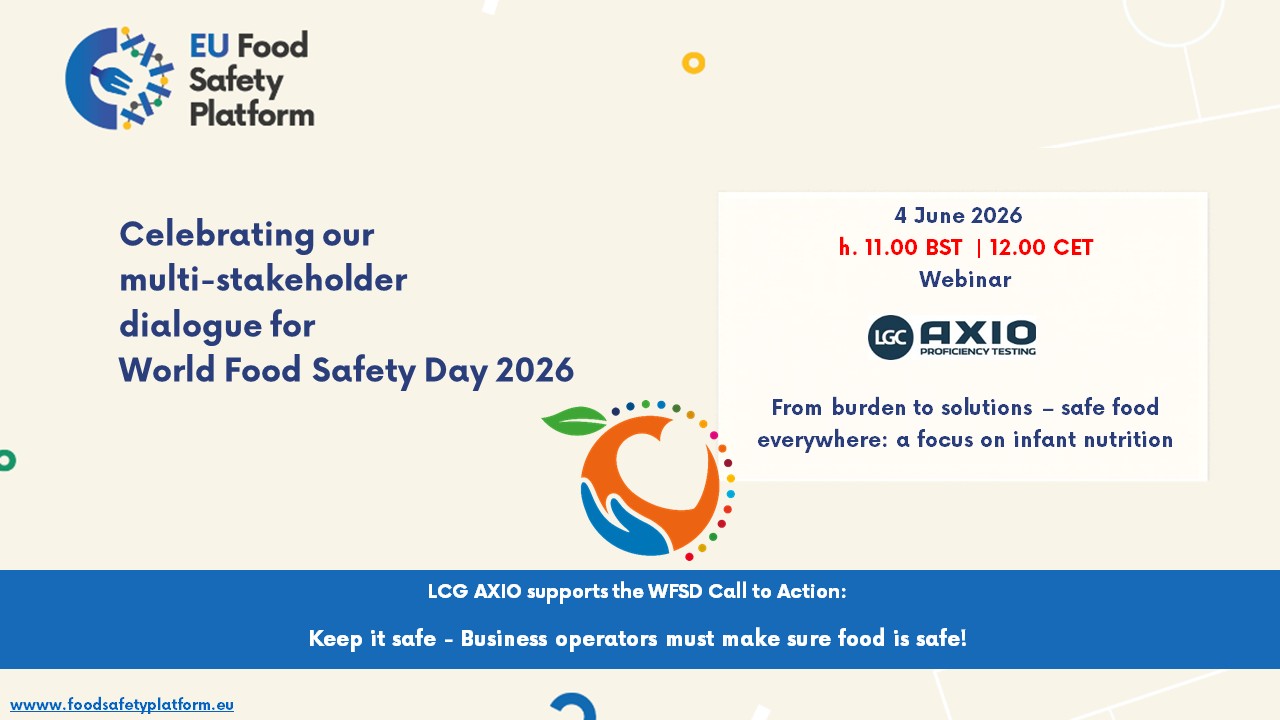
EU Food Safety PlatformWFSD 2026 multi-stakeholder dialogue
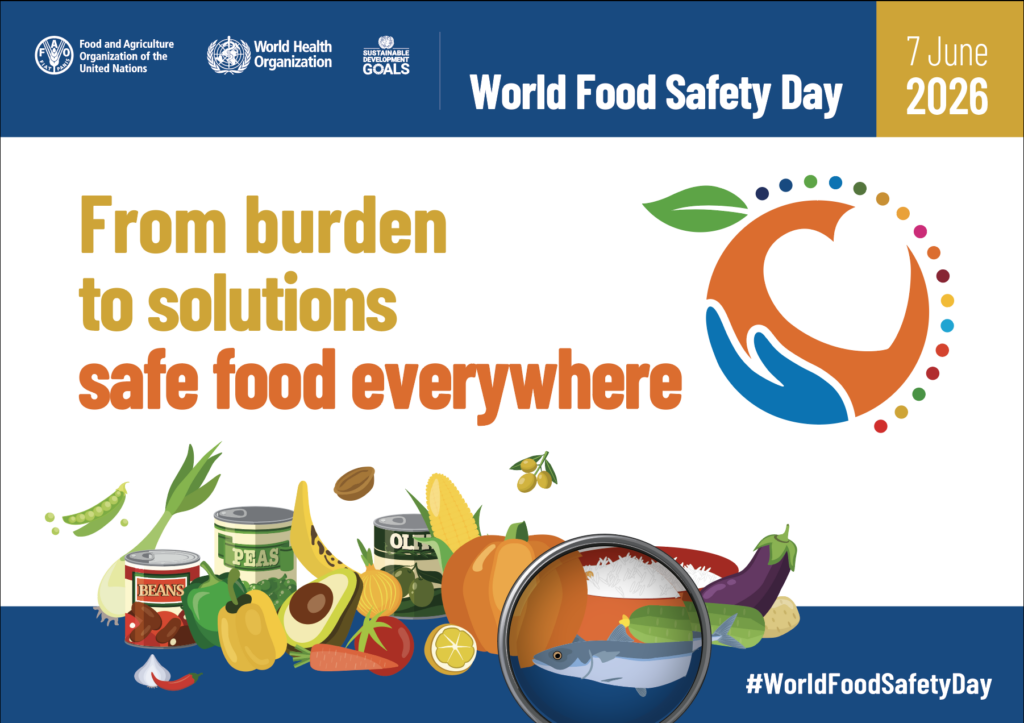
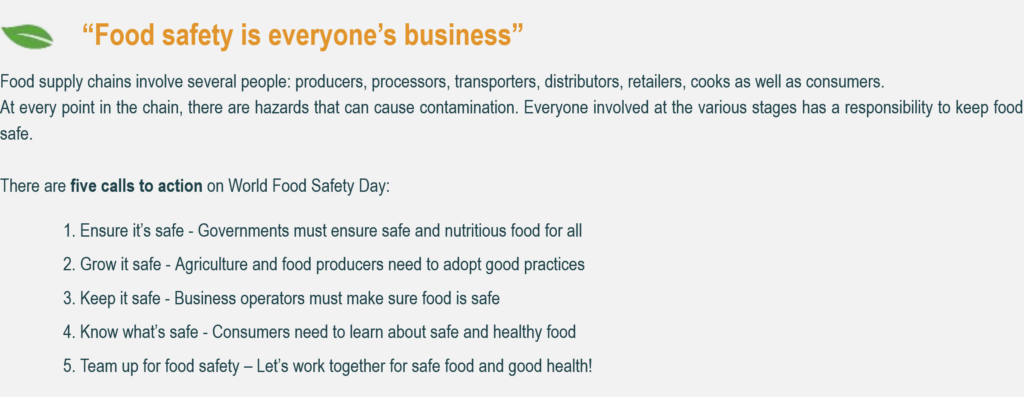
This year’s World Food Safety Day theme has been officially announced: “From burden to solutions – safe food everywhere”, underlining how robust data on foodborne diseases can be transformed into concrete actions that protect everyone’s health. By quantifying the impact of unsafe food, national authorities, food business operators and consumers can prioritise risks, design targeted interventions and make informed choices that reduce illness, costs and avoidable loss of life
Reliable health and surveillance data are the backbone of effective food safety governance, enabling evidence-based policies, coordinated multisectoral responses and smarter investments along the entire food chain. From farm to fork, all actors – farmers and producers, transporters, retailers, food inspectors, food handlers and consumers – benefit from science-based guidance that helps prevent contamination and foodborne outbreaks. Turning the “burden” into “solutions” means using information on who is most affected, where, and why, to implement measures that make food as safe as possible, everywhere.
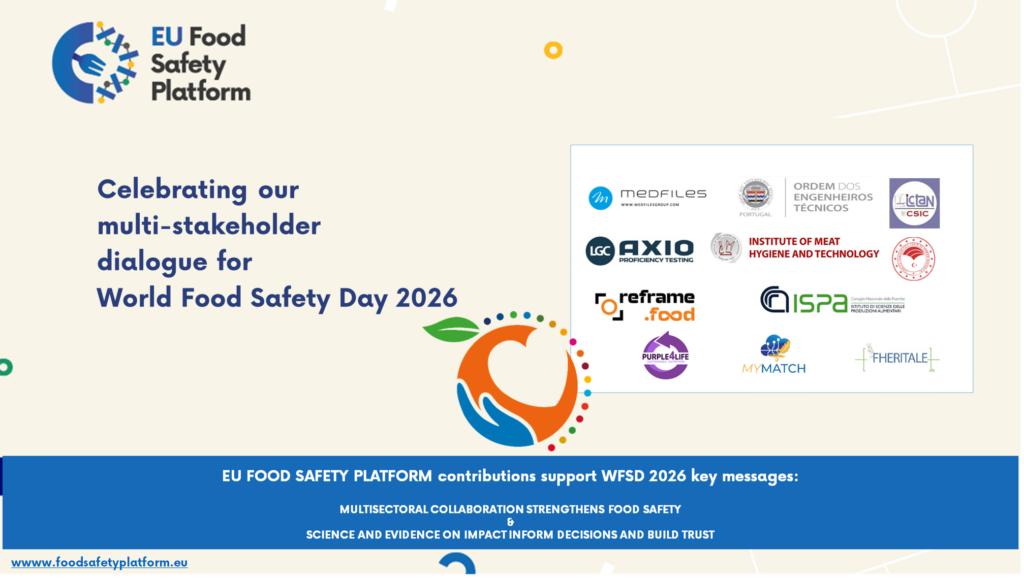
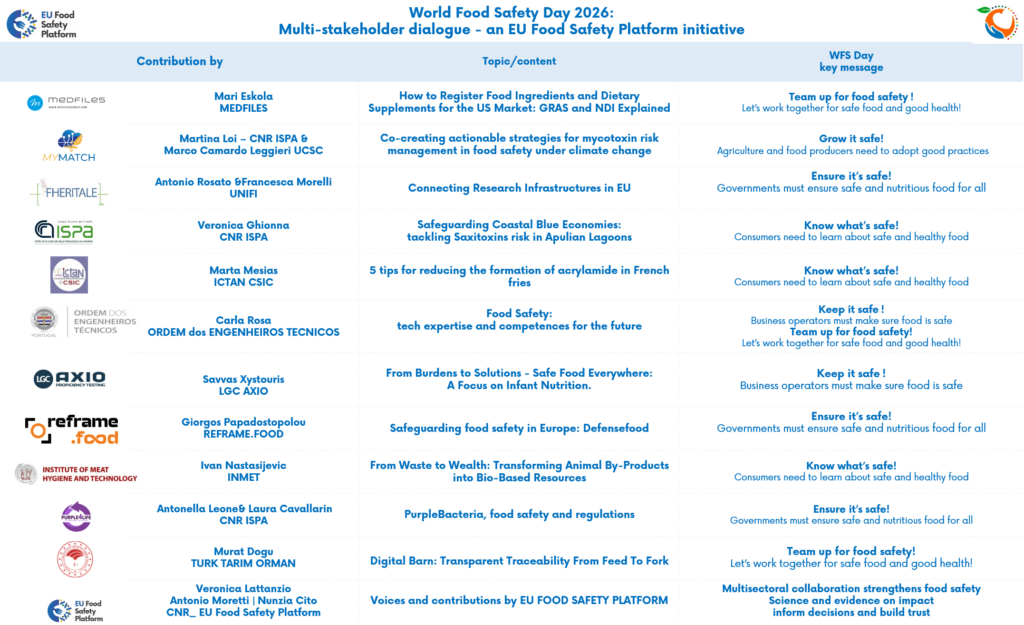
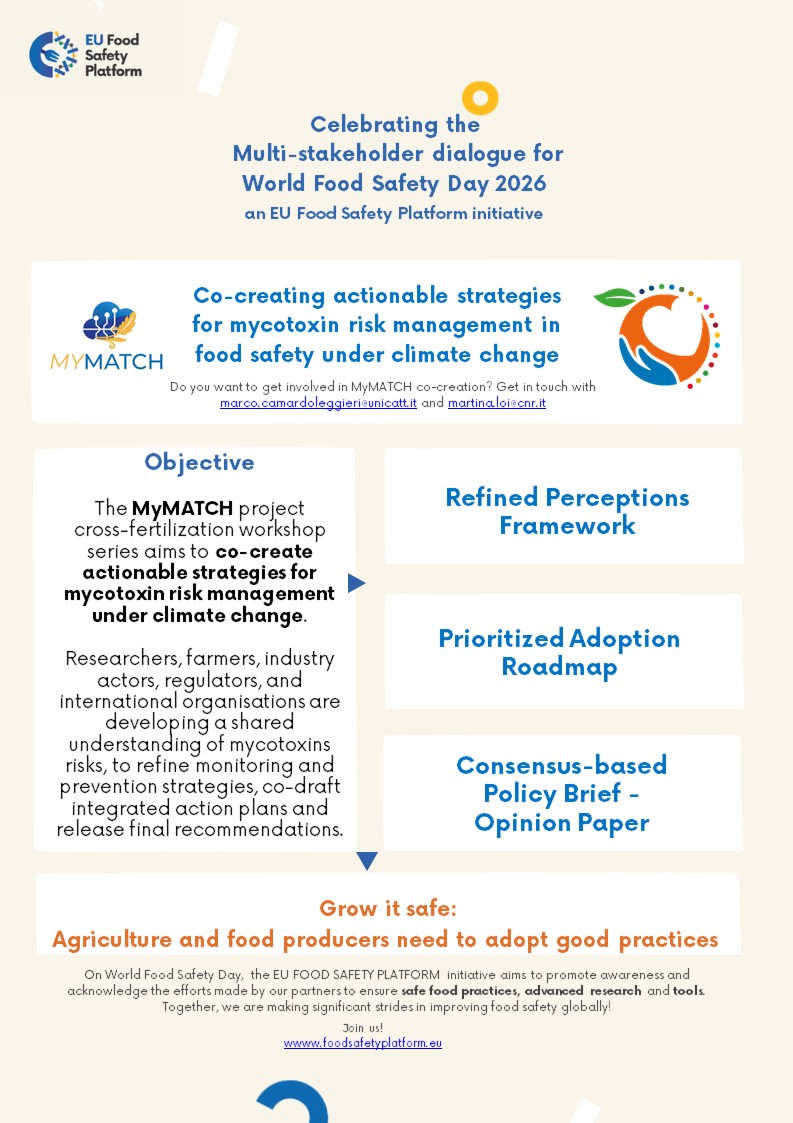
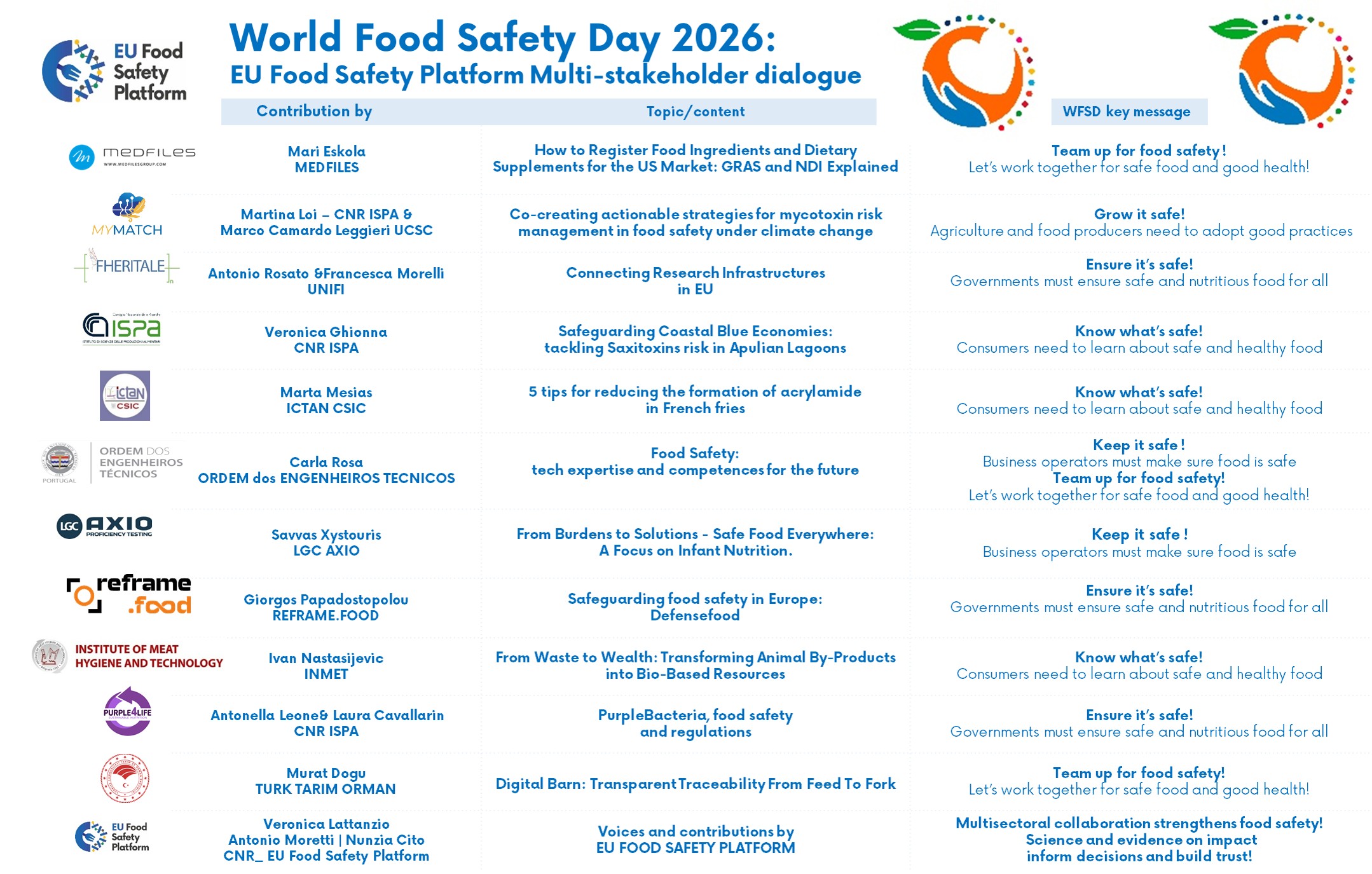
After its successful 2025 edition, to celebrate World Food Safety Day 2026, the EU Food Safety Platform is launching a week-long multi-stakeholder dialogue from 1 to 7 June 2026, featuring contributions from its members and partners across Europe. The aim is to showcase experiences, data-driven approaches and innovative practices that translate the global theme into concrete actions at EU and national level.
The call for contributions to be featured during the week 1–7 June 2026 is now open! EU Food Safety Platform members are invited to share short inputs such as case studies, tools, policy initiatives, research insights, training or communication activities that illustrate how they use evidence to strengthen food safety. Please submit your contribution by 17 April 2026 via this FORM to join the celebration of World Food Safety Day 2026.
Selected contributions and topics may be further explored in the upcoming EU Food Safety Forum 2026, offering a pathway from online dialogue to deeper face-to-face discussion and potential follow-up actions. This is an opportunity to give visibility to innovative experiences and to collectively advance solutions that make food safer for all.
Safe Food, Smart Future: European Innovations for Tackling Emerging Risks
The EU‑funded HOLiFOOD and FoodSafeR projects will host their joint final conference, “Safe Food, Smart Future: European Innovations for Tackling Emerging Risks”, on 10–11 June 2026 at the Omnia Building, Wageningen University & Research, in the Netherlands.
This two‑day event will bring together leading scientists, risk assessors, policymakers, industry representatives, and young researchers to explore how Europe can better anticipate and manage emerging food safety risks in increasingly complex food systems. Participants will delve into cutting‑edge topics including:
AI‑based and data‑driven prediction of emerging hazards
Multi‑stakeholder co‑design of new food safety tools
A digital hub providing guidance on emerging risks
Food safety challenges in novel or low‑regulated production systems
Advanced analytical and detection methods for chemical and microbiological hazards
Holistic risk assessment approaches for resilient food safety management
The programme features keynote lectures, thematic scientific sessions, poster presentations, and short talks by early‑career scientists—offering a comprehensive view of Europe’s latest innovations for a safer, more resilient agrifood system.
The event is open to researchers, food safety professionals, policymakers, industry stakeholders and students.
The 16th Rapid Methods Europe (RME) conference, RME2026, will take place from 8-10 June 2026 in Amsterdam, the Netherlands, chaired by Dr. Aart van Amerongen from BioSensing & Diagnostics at Wageningen University & Research.
This edition emphasizes technologies over sectors, uniting experts in agri-food, plant science, water/environment, human/animal health, and forensics for cross-disciplinary innovation. With sessions on food/feed, plant, water, health (environment), and human/animal topics, the event advances rapid diagnostics crucial for EU food safety and One Health approaches. Key areas for detecting pathogens, contaminants, allergens, and antimicrobial resistance include:
(bio)sensors
DNA/RNA methods
paper-based tests
microfluidics
spectrometry
RME2026 aims to foster academia-industry ties, share breakthroughs from lab to on-site use, and spark new applications through knowledge exchange, through plenary lectures, parallel sessions, posters, workshops, vendor demos, and an exhibition. For details and registration, visit https://www.rapidmethods.eu.
The event is open to researchers, food safety professionals, policymakers, industry stakeholders and students.
Bridging Science, Policy, and Society in Food Systems
The FutureFoodS Partnership hosts Webinar 2 on the science-policy-society interface (SPSI) in food policy, focusing on institutional and territorial coherence through national case studies. The session will explore practical implications of science-policy interfaces (SPI) via cases from Italy, Denmark, and Belgium (Flanders), highlighting multi-actor approaches and networking for food system transitions. Discussions differentiate SPSI from SPI, emphasizing scientific integrity’s role.
Case studies:
Italy: Transdisciplinary, multi-actor policy to bridge gaps in food policies.
Denmark: SPI supporting the Food Agency’s shift to plant-based diets.
Flanders, Belgium: Networking via policy-science-society for food transitions.
Guided breakout brainstorming addresses enablers/hindrances in scientist-policymaker dialogue, good SPSI practices, and their generalizability across contexts. Insights will shape final guidelines in Webinar 3 on 22 April.
The Purple4Life Horizon Europe project and the COST Action PURPLEGAIN will jointly host a high‑level workshop on 19–20 March 2026 in Mons, Belgium, bringing together researchers, industry stakeholders, technology developers and innovators working with purple phototrophic bacteria (PPB).
This interdisciplinary event—the 10th PurpleGain Workshop—focuses on advancing PPB‑based solutions for sustainable food and feed systems. Participation is open to PhD students, post‑doctoral researchers, academics, start‑ups, entrepreneurs, and developers interested in PPB technologies, from metabolism and process optimisation to applications in aquaculture, livestock nutrition, functional ingredients, and regulatory aspects. Mari Eskola (MEDFILES) and Christoph von Holst (ex JRC) – members of the EU FOOD SAFETY PLATFORM – will contribute to hte workshop by discussing respectively on the “Road map to the novel food” and “The analytics in the regulatory dossier preparation“.
The workshop will offer the stage to contributions covering innovations such as PPB metabolism, productivity improvements, PPB‑derived feed and functional ingredients, and strategies to enhance nutritional quality and sustainability in food and feed applications.
This event represents a key opportunity for the food safety and bioeconomy communities to explore how PPB can contribute to safe, sustainable, and circular agrifood chains, aligning with emerging EU priorities on resource recovery and innovative bio‑based ingredients. For more details visit the workshop website
MYCOAFRICA: Advancing Mycotoxin Management ensuring Food Security and Safety for One Health
The African Society of Mycotoxicology organizes the 4th African Symposium on Mycotoxicology (ASM 2026), “MYCOAFRICA: Advancing Mycotoxin Management ensuring Food Security and Safety for One Health” from 02-05 August 2026 at the Windhoek International Convention Centre, Namibia. The symposium is jointly organised by ASM and the University of Namibia, with the support of the International Society for Mycotoxicology (ISM).
ASM 2026 will address mycotoxin challenges across the food and feed chain with strong links to food security, public health, and One Health. Conference themes include:
Mycotoxin exposure and One Health
Mycotoxins and Climate change
Advances in mycotoxin analysis: challenges in detection in food and feed; detoxification methods
Impact-oriented Strategies for Mycotoxin Management in Africa
Socioeconomic Dimensions of the Mycotoxin Burden in Africa
Leveraging Artificial Intelligence (AI) in Mycotoxin Risk Management
Policy and Regulatory Interventions for Mycotoxin Control
The organisers look forward to welcoming participants to share knowledge and co-develop solutions that strengthen mycotoxin management and food safety across African food systems. Further information and updates are available at https://africansocietyofmycotoxicology.org/
Innovation in Research and Education for the transition to sustainable food systems
ISEKIFOOD26 – the 8th International ISEKI-Food Conference 2026 will take place from June 1st to 3rd, 2026, and will be hosted by the University of Algarve in Faro, the heart of the southern coast of Portugal. This year’s conference, themed “Innovation in Research and Education for the Transition to Sustainable Food Systems,” will be a platform for global experts to discuss pioneering advancements in the agri-food sector.
This edition will provide opportunities for oral and poster presentations across three major topics, aiming to foster discussions and collaborations toward more sustainable food systems:
1. Education and training for sustainable and innovative food systems 2. Research for sustainable and innovative food systems 3. Responsible food production and consumption
Key Dates to Remember:
Abstract Submission Deadline: 8 February 2026
Notification of Abstract Acceptance: 20 Mar 2026
Early Bird Registration Closing: 13 April 2026 (payment to be completed by May 1)
The 2025 EU Food Safety Forum – held on December 2-3, 2025, at the CNR headquarters in Rome – highlighted the Forum’s role as a collaborative space where scientists, policymakers, industry and citizens jointly address food safety, sustainability and geopolitical challenges, and set priorities for the 2026 edition.
Key messages Participants stressed the need for a united European scientific community that also engages society at large, underlining responsible participation, leadership and long‑term policy vision as crucial to protect food safety in a context of geopolitical instability, funding cuts and big transitions. Speakers pointed to skills gaps linked to automation and called for renewed investment in training new talent in food safety research.
The discussions emphasised that innovation must move from isolated projects to true ecosystems based on co‑creation, where research, companies, authorities and consumers work together rather than in silos. Building trustful bridges with developing countries was identified also as essential to strengthen global food security and safety.
Science-Policy-Society Synergy
The Science-Policy-Society Synergy session, introduced by CNR representatives – Silvano Fares, Nicola Fantini, Antonio Moretti and Veronica Lattanzio – opened the Forum by underscoring the need for a close and structured interaction between scientific evidence, policymaking and societal needs in shaping the future of food safety in Europe. The session highlighted a comprehensive, multi‑stakeholder approach aimed at ensuring that food safety strategies are fully aligned with public health priorities and with the evolving expectations of consumers. Following an expression of gratitude to the institutional representatives for their valuable contributions and their willingness to cooperate with the EU FOOD SAFETY PLATFORM, the floor was given to key contributors: Stef Bronzwaer from EFSA, Angelo Riccaboni from PRIMA Foundation, Serena Borgna from APRE, Giovanni Leonardi from the Italian Ministry of Health,and Magdalena Zatorskafrom the University of Warsaw. Their interventions underlined the importance of coordinated action among competent authorities, the scientific community and society at large to strengthen trust and to prepare food safety systems to address emerging challenges effectively and boost competitiveness in the bioeconomy framework.
Updating the SRIA in the Bioeconomy framework: a multi-stakeholder vision
This session convened a broad range of actors to jointly reflect on the future direction of food safety research and innovation. Building on previous co‑creation efforts, it explored how emerging priorities in the bioeconomy can be integrated into the Strategic Research and Innovation Agenda (SRIA) for food safety.
This critical discussion showcased how science, policy, and innovation converge to define priorities for the Strategic Research and Innovation Agenda (SRIA).
Future-Oriented Co-Creation
The session “Updating the SRIA in the Bioeconomy Framework: a Multi‑Stakeholder Vision” convened a broad range of actors to jointly reflect on the future direction of food safety research and innovation. Building on previous co‑creation efforts – including input from the FS4EU project, the EU FOOD SAFETY FORUM 2023 and 2024 – it explored how emerging priorities in the bioeconomy can be integrated into the Strategic Research and Innovation Agenda (SRIA) for food safety. EU Food Safety Platform experts Nastasia Belc (IBA Bucharest) and Pieternel Luning (WUR) led the session, focusing on updating theSRIA to address emerging challenges. Participants – working in 4 sub-groups – discussed how collaborative initiatives and advanced research are already contributing to the transformation of European food systems, preparing them to respond more effectively to upcoming challenges in their transition towards a bioeconomy model and greater competitiveness.
Cooperation space
The EU FOOD SAFETY PLATFORM served as a catalyst for future cooperation, outlining a broad framework that connects research infrastructures, networks and innovation actors. Presentations from European research and international infrastructures showcased the resources and services offered by projects such as FHERITALE and Up-rise, alongside concrete experiences from companies including ENCO s.r.l. with SEEDS – Saining Economies and Enhancing Dynamic Structures, and nextProtein SA, as well as key networks such as FoSSNet: Pan-European Food Systems Science Network, CERERE – PRIMA Agrifood cluster, and Food Safety and Risk journal – BMC, part of Springer Nature. The session also highlighted methodological tools for understanding and visualising connections within these communities, such as Net-Map analysis. The session was conducted in an engaging format by Monika Tomaniova (UCT PRAGUE) and Mari Eskola (MEDFILES), who facilitated exchanges between infrastructure representatives, companies and scientific networks.
6 selected Young researchers took centre stage in the “Youths in action for the Future of Food Safety in the EU” session, presenting their poster pitches on food safety research and innovation. This dedicated space confirmed the Forum’s commitment to empowering the next generation of food safety experts and integrating their perspectives into the broader European agenda.
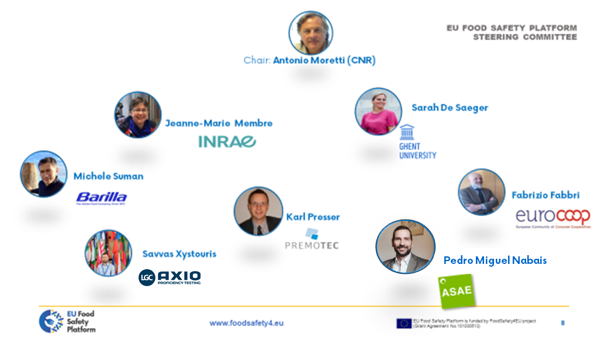
The Closing Session of the 2025 EU Food Safety Forum was conducted by Michele Suman excellently wrapped up in the closing session, together with the Platform Steering Committee members Antonio Moretti, Karl Presser, Jeanne-Marie Membré, Savvas Xystouris, Sarah De Saeger, and Coordinator Veronica Lattanzio, Nunzia Cito. The panel confirmed the Forum as a collaborative space where scientists, policymakers, industry and citizens jointly address food safety, sustainability and geopolitical challenges. It underscored the EU Food Safety Platform’s commitment to fostering innovation and sustainability through collaborative efforts, while setting priorities for the 2026 edition.
As participants return to their respective fields, the lessons learned and partnerships formed in Rome are expected to drive impactful changes in food safety systems across Europe. The continued engagement of all stakeholders will be crucial in advancing the platform’s goals and ensuring a safer food future for all.
Thank you for all for the participation!
The Forum is powered byour Platform members
A Special Issue of the Food Safety and Risk Journal will showcase selected breakthroughs and the outomes of our multi-actor event!
With the increasing complexity of global food systems, emerging risks in food safety demand more sophisticated approaches. Artificial Intelligence (AI) is transforming the field, and, although still emerging, is set to play a critical role in the EU’s food safety systems. The EU’s FoodSafety4EU and HOLiFOOD projects highlight AI’s potential in predictive risk analysis, digital platform co-design, and fostering a culture of data sharing among stakeholders. By exploring technical, legal, educational barriers and enabling factors, as well as by piloting co-developed solutions, these projects are paving the way for a safer, more resilient food supply chain.
FoodSafety4EU and HOLiFOOD employ a “living lab” approach, where AI capabilities are co-developed across various multi-stakeholder participatory workshops. This collaborative model connects and engages with experts from diverse sectors, advancing risk assessment by incorporating cross-disciplinary insights and fostering innovations in AI and machine learning (ML).
The FoodSafety4EU Strategic Research and Innovation Agenda (SRIA), as a result of one ofthese living labs, emphasizes AI’s transformative potential for real-time and anticipatory risk management. It envisages priority research needs to provide food business operators (FBOs) and authorities with the tools necessary for transparent, adaptive food safety protocols.
The ongoing living labs in the HOLiFOOD project are driving a multi-actor co-design approach on AI-related food safety topics, namely i) AI-driven emerging risk identification, ii) holistic risk assessment and acceptance and iii) AI-driven digital platform codesign. Through AI-driven data collection and advanced modelling, these living labs target challenges such as environmental contaminants, microbiological hazards, and climate-driven shifts in foodborne risks.
Future Directions: enablers and challenges in trusted AI development
AI’s role is as effective as the trust it garners from stakeholders. Critical enablers include harmonized legislation for data sharing, user-friendly interfaces, and infrastructure that ensures data accessibility. The EU is urged to streamline policies that facilitate safe data flows while respecting GDPR and data protection laws.
As we move towards integrating AI into everyday food safety practices, ongoing research emphasizes priority risk areas, including pesticide contamination, microbial hazards, and environmental contaminants. Recognizing the nuances of these risks, especially in light of climate change, will require both robust AI-driven data models and a balanced approach to communicating risks to the public and industry players alike.