
FAO report: Precision Fermentation – With a Focus on Food Safety
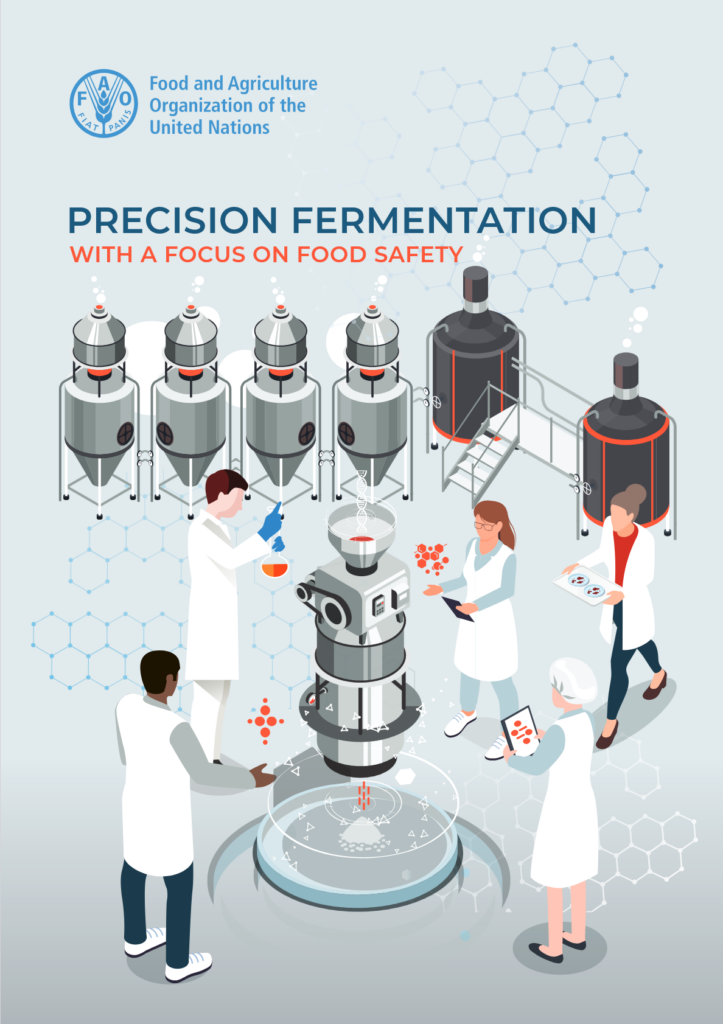
The Food and Agriculture Organisation of the United Nations (FAO) has published the report “Precision Fermentation – With a Focus on Food Safety“, which examines the emerging technology of precision fermentation and its implications for food safety.
Precision fermentation involves using specifically engineered microorganisms to produce targeted food ingredients such as proteins, lipids, and vitamins, often as sustainable alternatives to animal-derived products.
The report highlights the lack of a global definition for precision fermentation, complicating harmonised international regulations. It provides an in-depth analysis of the production process, potential food safety hazards-including allergenicity concerns-and compares regulatory frameworks across various countries. Through three detailed case studies and consultations with regulatory experts worldwide, the publication aims to guide policymakers and food safety authorities in establishing effective, adaptive regulatory approaches to ensure the safe introduction of precision-fermented foods globally.



Latest Reports, scientific publications

Tools and methods to support the design and implementation of policies for agrifood systems transformation
Overview Report on the outcome of a survey in Member States in 2025 on Food Safety Culture official controls
New EU labelling requirements
A FoodSafeR perspective on emerging food safety hazards and associated risk
The 2024 European Union report on pesticide residues in food – EFSA
Food safety implications of recycled plastics and alternative food contact materials
Most Interesting Reports, scientific publications

Industry 4.0 technologies in quality and safety control systems in food manufacturing: A systematic techno-managerial analysis on benefits and barriers
Unmasking Mycotoxins in Spices – a white paper by LCG AXIO
Food Supplements – a white paper by LCG AXIO