
“Artificial intelligence for food safety – A literature synthesis, real-world applications and regulatory frameworks”
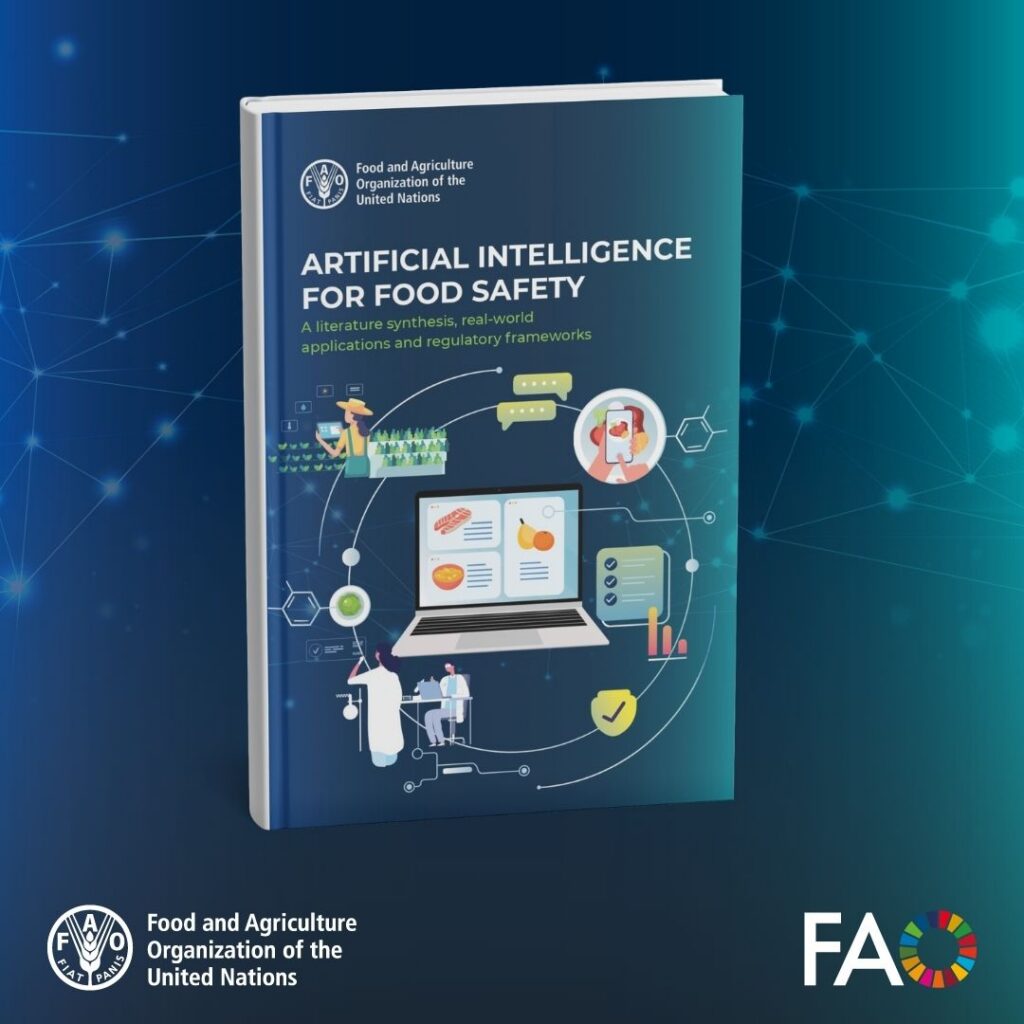
A new technical report by FAO and Wageningen Food Safety Research offers a global overview of artificial intelligence (AI) in food safety. Reviewing 141 recent scientific publications, it highlights practical applications of AI in laboratory testing, inspections, border controls, and risk communication, with examples from both high- and low-resource settings. The report also evaluates governance frameworks and stresses the need for high-quality datasets and improved AI literacy, especially in public sector agencies. Despite enthusiasm, the study notes data and capacity gaps in many food safety authorities, making responsible, well-managed AI adoption essential for risk-based prevention.
The publication draws from discussions at an FAO global seminar on November 6, 2024, which brought together 1,023 participants from 107 countries to share experiences and challenges using AI for food safety. As technology develops, FAO will continue to help countries adopt responsible AI solutions to reduce foodborne risks, optimize regulatory efforts, and strengthen food safety worldwide.



Latest Reports, scientific publications

Overview Report on the outcome of a survey in Member States in 2025 on Food Safety Culture official controls
New EU labelling requirements
A FoodSafeR perspective on emerging food safety hazards and associated risk
The 2024 European Union report on pesticide residues in food – EFSA
Food safety implications of recycled plastics and alternative food contact materials
“Artificial intelligence for food safety – A literature synthesis, real-world applications and regulatory frameworks”
Most Interesting Reports, scientific publications

Industry 4.0 technologies in quality and safety control systems in food manufacturing: A systematic techno-managerial analysis on benefits and barriers
Unmasking Mycotoxins in Spices – a white paper by LCG AXIO
Food Supplements – a white paper by LCG AXIO